Choose something that can wait until tomorrow, and let dinner stay as planned.
A bunch of flowers at the front door comes with a small list of jobs: find a vase, trim the stems, clear a space. There may already be a pan on the hob and coats on the stairs. The flowers can be lovely; the timing deserves a thought.
The same question helps with any host gift: what will someone have to do with this as soon as you hand it over? Choose with that moment in mind. A thank-you should be easy to receive.
Give them permission to save it
If you are bringing something for the table, ask first. “Shall I bring pudding?” gives the host a useful decision. Arriving with a pudding and expecting it to be served gives them a different one, possibly after they have made their own.
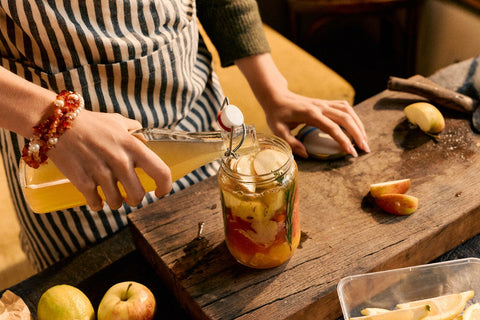
A gift can sit outside the meal altogether. A jar for a later breakfast, a small box of chocolates for another evening, or coffee chosen for the way they make it can come with a simple line: “This is for you to enjoy another day.” That takes the expectation out of opening it now.
Keep any storage instructions with the gift. If it needs immediate refrigeration, mention that before it disappears beneath the coats.
Choose for the kitchen they have
Coffee is more useful when the grind suits the recipient's equipment. Tea is easier to give when you know whether they use loose leaves or bags. A beautiful ingredient that needs a special tool or an unfamiliar cooking project asks more of someone than its size suggests.
Think about an ordinary morning in their kitchen. What would they reach for? The answer may be a familiar favourite rather than the most unusual thing on the shelf. If you do not know their tastes, ask a small question instead of making an elaborate guess.
With food and drink, check what they can enjoy. Keep the ingredient information intact, and do not assume that a gift for the household will suit everyone in it.
Let a handmade object be useful
A small dish can hold a spoon, keys or the last biscuit. A cloth can earn a place beside the sink. Choose an object for a purpose you can picture, with care instructions that fit the recipient's routine.
Be more cautious with large pieces, strong fragrances and things that need a permanent place on display. Taste is personal, and a host should not feel obliged to rearrange a room to show that they appreciated your visit.
If you know who made the object, put the name in the note. One specific detail about the making is enough; the gift does not need a speech at the door.
Keep the thank-you personal
A short note can explain the choice: “For your Saturday coffee,” or “I remembered you liked this.” Use the detail you actually know. You do not need to make the occasion grander than it was.
Hand over the gift, let the host put it aside, and join the evening. Tomorrow's breakfast can be part of the thank-you too.